Vector Art of Set of Bison Silhouettes: A Practical Guide for Designers
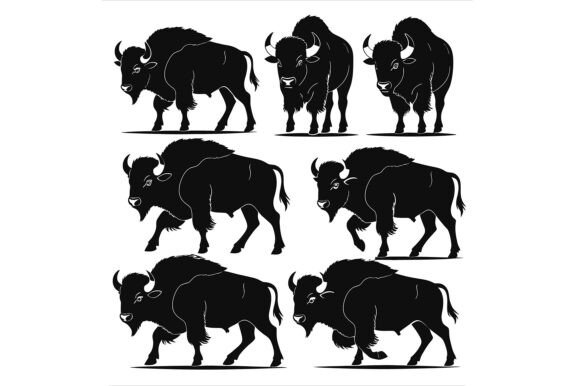
When you need a graphic that commands attention without overwhelming your layout, the Vector Art of Set of Bison Silhouettes offers a compelling solution. These high-quality illustrations capture the raw power and distinct profile of the American bison, providing a versatile asset for everything from rustic branding to modern educational materials. Whether you are a small business owner looking to launch a line of apparel or an educator creating engaging visual aids, having access to scalable, editable graphics is essential for professional results.
However, simply finding an image file is rarely enough. Many creators make the mistake of assuming all "vector" files are created equal, leading to frustration when they attempt to edit or print their designs. Understanding the nuances of this specific set—how it was crafted, what formats are included, and how to properly utilize them—can save you hours of troubleshooting and ensure your final product looks as intended.
Understanding the Value of Editable Vector Files
The primary advantage of this Vector Art of Set of Bison Silhouettes lies in its format. Unlike standard raster images (such as JPEGs or PNGs) which are made of pixels, vector graphics are built on mathematical paths. This distinction is critical for anyone planning to scale their design. If you stretch a pixel-based image too far, it becomes blurry and pixelated. With the included EPS file, you can resize the bison silhouettes to fit a tiny sticker or a massive billboard poster without losing a single ounce of clarity.
This flexibility is particularly valuable for print-on-demand entrepreneurs. Imagine designing a t-shirt where the bison graphic needs to be large enough to cover the back but also small enough for a pocket logo. With a fully editable vector, you can adjust the size instantly while maintaining crisp edges. Furthermore, the ability to change colors directly within vector software allows you to match your brand palette perfectly, rather than being stuck with the default black silhouette provided in the preview.
Common Pitfalls When Using Downloaded Graphics
Despite the benefits, there are several common mistakes designers make when working with downloaded assets like these bison silhouettes. One frequent error is relying solely on the included JPEG file for production work. While the high-resolution JPEG is excellent for quick mockups, web thumbnails, or social media posts where exact scalability isn't required, it lacks the editability of the EPS file. Attempting to manipulate a JPEG in a vector program often results in a flattened image that cannot be recolored or reshaped, limiting your creative potential.
Another oversight involves neglecting to verify the software compatibility before purchasing. Not all design programs handle EPS files identically. While industry standards like Adobe Illustrator, CorelDRAW, and Inkscape open these files seamlessly, some simplified design tools may struggle with complex vector paths. If you are using a basic graphic editor, you might find yourself unable to ungroup the elements or modify the anchor points, rendering the "fully editable" promise useless for your specific workflow.
Additionally, many users overlook the importance of color modes. If you intend to print your bison design professionally, you must ensure your document is set to CMYK (Cyan, Magenta, Yellow, Key/Black) rather than RGB (Red, Green, Blue). While screens display colors in RGB, printers use CMYK. Failing to convert your vector art to the correct color mode before sending it to print can result in dull, washed-out colors that do not match your digital proof.
How These Mistakes Impact Your Projects
The consequences of these oversights extend beyond minor inconveniences. Using a low-resolution JPEG for a large-format print job can ruin an entire batch of merchandise, costing you money and damaging your reputation with customers who expect high-quality products. Similarly, attempting to force a vector file into incompatible software can lead to broken paths, missing fonts, or distorted shapes, requiring you to start the design process over from scratch.
For educators and scrapbookers, the inability to customize colors might mean the design clashes with the theme of the project, making the final presentation look disjointed. In a branding context, inconsistent scaling due to using raster files instead of vectors can make a logo appear unprofessional, undermining the trustworthiness of the business it represents.
Best Practices for Utilizing the Bison Silhouette Set
To avoid these issues and maximize the value of the Vector Art of Set of Bison Silhouettes, follow a few practical steps during your workflow. First, always prioritize the EPS file for any project involving printing, resizing, or recoloring. Open the file in a dedicated vector editing application immediately after downloading to inspect the layers and paths. Ensure that the artwork is grouped logically and that no hidden elements are affecting your canvas.
If you are unsure about your software's capabilities, test the file first. Try changing the fill color of one of the bison silhouettes or adjusting its size by 200%. If the image remains sharp and the color changes smoothly, you are ready to proceed. If you encounter errors, consider using a free vector tool like Inkscape to convert or clean up the file before importing it into your primary design suite.
For those creating physical products, such as t-shirts or posters, remember to check the resolution settings of your output device. Even though vectors are resolution-independent, the export settings matter. When saving your final design as a PDF or high-res image for the printer, ensure you select the highest quality settings available. For digital uses like web graphics or email invitations, the included JPEG provides a convenient, lightweight option that loads quickly without sacrificing visual appeal.
Evaluating Quality and Originality
It is also important to recognize the origin of the artwork. This design is an original illustration, created with the assistance of AI-generated concepts and then fully vectorized, resized, and carefully edited by a human designer. This hybrid approach combines the speed of AI ideation with the precision of manual vectorization. The result is a clean, professional silhouette that avoids the jagged lines and artifacts often found in raw AI outputs.
Before integrating any downloaded graphic into a commercial project, verify the licensing terms. This set is designed for both personal and commercial use, including print-on-demand products, crafting DIY projects, and branding elements. However, always confirm that you have the right to use the specific version of the file you possess. Using unauthorized or improperly licensed assets can lead to legal complications, especially for businesses selling merchandise.
Final Checklist Before You Start
Before you begin your next project with the Vector Art of Set of Bison Silhouettes, run through this quick checklist:
- Format Check: Do you have the EPS file for editing and the JPEG for quick previews?
- Software Compatibility: Can your design program open and edit EPS files effectively?
- Color Mode: Is your document set to CMYK for print or RGB for digital?
- Licensing: Have you confirmed the usage rights for your specific project type?
- Scalability Test: Have you resized the image to ensure it remains crisp at your target dimensions?
By taking these precautions, you ensure that your creative vision is executed flawlessly. The Vector Art of Set of Bison Silhouettes is more than just a download; it is a flexible tool that, when used correctly, elevates the quality of your work. Whether you are crafting a unique greeting card, designing a logo for a new venture, or creating educational content, understanding the technical aspects of your assets empowers you to produce professional, polished results every time.